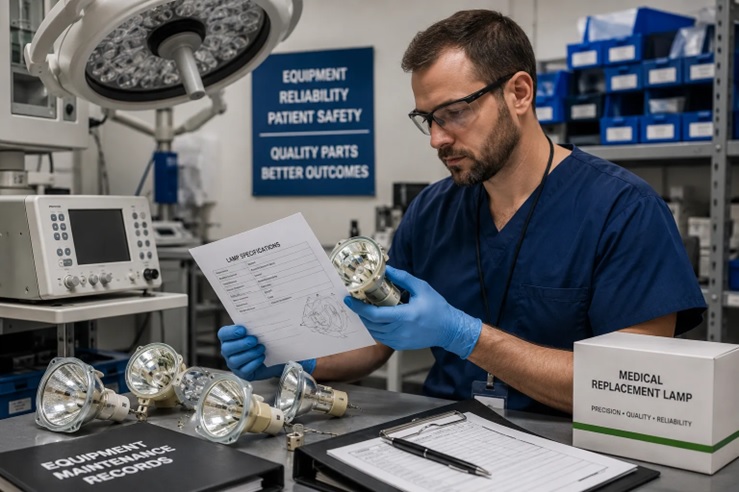
Medical equipment reliability depends on more than preventive maintenance schedules and routine inspections. Many diagnostic, surgical, and examination systems rely on specialized lamps that must perform consistently to support patient care. When a lamp reaches the end of its service life, finding the correct replacement can be more complicated than expected.
Healthcare facilities often face challenges related to compatibility, supplier availability, procurement timelines, and aging equipment. Understanding these issues can help biomedical technicians, procurement teams, and clinical engineering departments reduce downtime and improve maintenance planning.
Verifying Lamp Compatibility Across Equipment Models
One of the most common issues when sourcing replacement lamps for medical equipment is ensuring compatibility with the original manufacturer specifications.
Medical devices often require lamps with precise electrical, optical, and physical characteristics. Even products that appear similar may differ in voltage, wattage, base configuration, color temperature, or light output. Installing an incompatible lamp can affect device performance, shorten component life, or create safety concerns.
Healthcare maintenance teams should always verify:
- Manufacturer part numbers
- Equipment model numbers
- Electrical specifications
- Physical dimensions and connector types
- Regulatory or manufacturer requirements
Maintaining accurate equipment records and replacement part histories can simplify future sourcing efforts and reduce the risk of ordering incorrect components.
Managing Discontinued Lamp Models
Many healthcare facilities continue operating reliable equipment long after original production has ended. While this approach can maximize equipment value, it often creates challenges when replacement parts become difficult to source.
Discontinued lamp models are especially common in older examination lights, microscopes, imaging systems, and specialty diagnostic equipment. Original equipment manufacturers may no longer stock certain components, leaving facilities searching for equivalent replacements.
When dealing with discontinued lamp models, organizations should:
- Identify replacement requirements before failure occurs
- Maintain inventory records for critical equipment
- Establish relationships with specialized suppliers
- Verify substitute products meet original specifications
Proactive planning is particularly important for facilities operating legacy equipment where replacement options may become increasingly limited over time.
Evaluating Supplier Reliability and Product Quality
Not all suppliers serving the healthcare maintenance market offer the same level of support. Procurement teams may encounter vendors with limited product information, inconsistent inventory, or insufficient technical documentation.
A reliable supplier should be able to provide accurate compatibility guidance and detailed product specifications. This becomes especially important when sourcing medical replacement bulbs for specialized systems where equipment performance depends on precise lamp characteristics.
Supplier evaluation should include consideration of:
- Product traceability
- Technical support availability
- Inventory consistency
- Experience with healthcare lighting parts
- Ability to assist with legacy equipment sourcing
Choosing suppliers based solely on price can sometimes lead to additional procurement costs if incorrect or low-quality components result in repeated replacements or equipment downtime.
Lead Times and Their Impact on Equipment Uptime
Lamp failures can quickly affect clinical operations when replacement inventory is unavailable. Extended lead times are a growing concern for healthcare facilities, particularly when sourcing specialized components from international manufacturers or limited production suppliers.
Unexpected delays may disrupt maintenance schedules and leave critical equipment unavailable for longer than anticipated.
To reduce risk, healthcare organizations should incorporate lamp sourcing into broader maintenance planning strategies. This may include:
- Maintaining minimum stock levels for critical lamps
- Tracking replacement frequency trends
- Identifying alternate sourcing options
- Reviewing supplier lead times regularly
Facilities that depend on surgical lamp replacement components or specialized diagnostic lighting systems often benefit from forecasting replacement needs before failures occur. This approach helps support equipment uptime and reduces the likelihood of urgent procurement situations.
Improving Procurement Planning for Current and Legacy Systems
Successful sourcing strategies require coordination between biomedical engineering, facilities management, and procurement teams. Equipment inventories should include detailed information about lamp requirements, expected service intervals, and known sourcing challenges.
For both current and aging systems, compatibility verification remains one of the most important steps in the procurement process. Many healthcare organizations work with specialized suppliers that provide technical support when identifying suitable replacements. Resources covering medical replacement lamps and bulbs can help maintenance teams confirm specifications and locate replacement lamps for medical equipment when manufacturer documentation is incomplete or older systems require additional sourcing support.
Long-term procurement planning helps healthcare facilities minimize disruption, control maintenance costs, and maintain reliable equipment performance throughout the lifecycle of both current and legacy devices.
By focusing on compatibility verification, supplier reliability, discontinued lamp management, and inventory planning, organizations can avoid many of the challenges commonly associated with sourcing hospital replacement lamps. A structured approach supports efficient healthcare maintenance operations while helping ensure critical equipment remains available when needed most.
